Editor's Note —
Creatively Speaking is for people who still care — about story, about the work, about what it costs to make something real. It's an ongoing conversation about how ideas survive: how they get made, what they take out of you and what they give back when they're done for the right reasons.
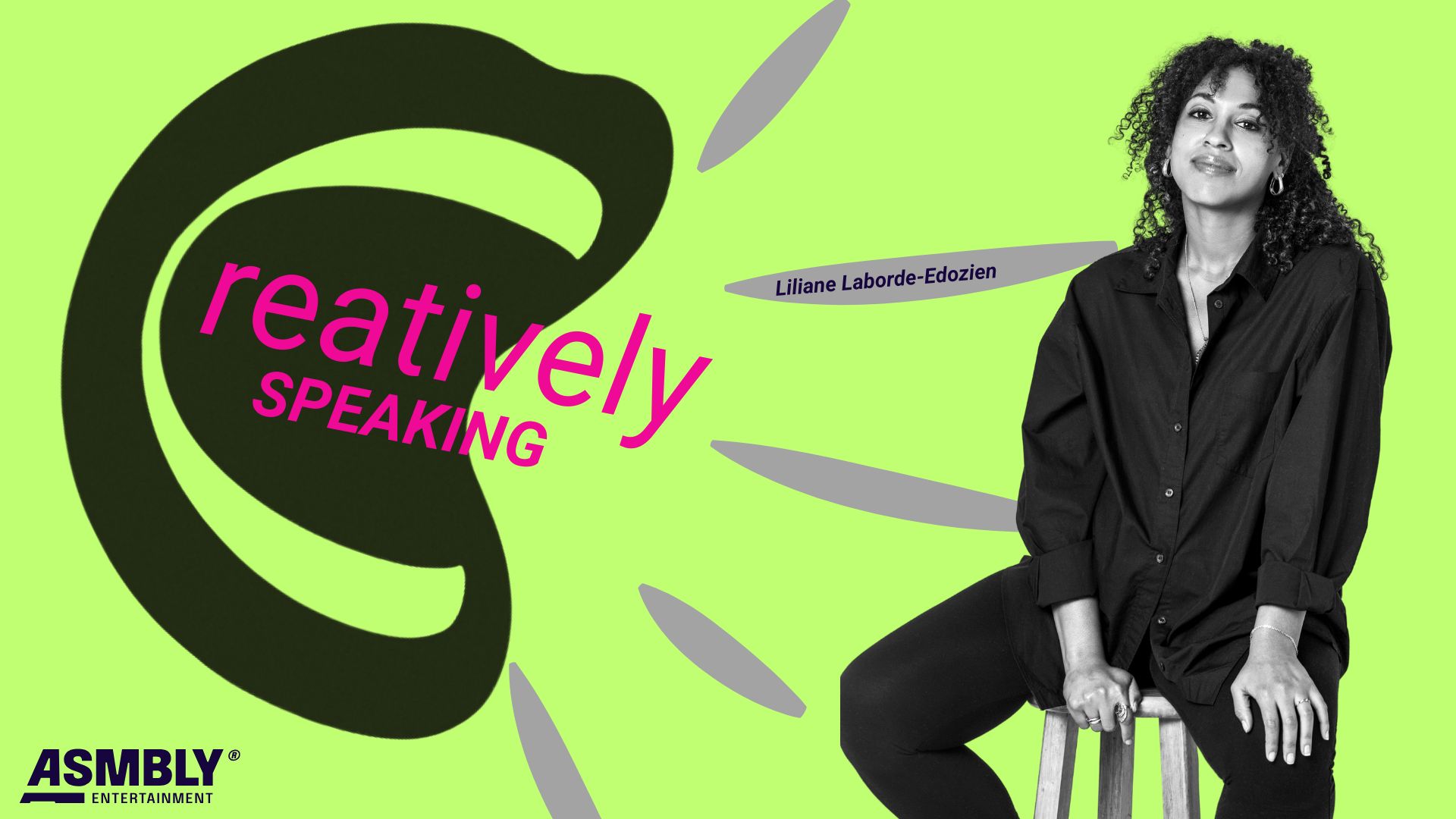
This time I spoke with Liliane Laborde-Edozien.
Miami Forever. Probably.
Miami introduced itself twice that morning — python hunters first, then Liliane.
Liliane Laborde-Edozien is a Nigerian–French–American director, writer and creative producer based in Miami. Her work moves between documentary and narrative film, grounded in empathy, curiosity and a global perspective shaped by a life across continents.
Her family tree forks across four flags — Nigeria and Brazil on one side, France and Italy on the other. Born in North Carolina. Raised between languages. Part of her childhood on a farm; a mother who moved like weather.
"When I bought a Dutch oven, it felt like a scandal. You can't carry that anywhere."
For someone raised in motion, a heavy pot is a declaration — a small act of staying put.
"I'm going to be in Miami for the foreseeable future. A lot of places have trade-offs. Some of the most beautiful places in the world are some of the most troubled."
It was the kind of line you say lightly but mean deeply. She didn't expand on it — she didn't need to. Beauty and tension often live side by side, and every place holds both in its own way.
From Science to Story.
Before film, she trained as a biologist — earning a B.S. from UC Berkeley and later an M.S. in Media Production from Imperial College London, where she graduated with distinction.
"I was disillusioned with academia and medicine. I've always been creative — into theater, dance — and I realized I'm good at communicating complex ideas."
That realization led her to a London program designed to turn scientists into storytellers. From there, she joined a fintech company that bought small businesses from retiring owners and sold them back to employees.
Her early "clients" were 57-page PDFs and websites stuck in 2003. She turned them into stories about workers buying back their livelihoods.
"It was this strange mix of branding and education. Listening to creatives, fighting for their work, talking clients down from bad ideas."
Her filmmaking career began in documentary, directing and field-producing projects across Africa and Latin America.
Her first independent project, Drummies, was made with another young filmmaker in the Cape Flats — one of South Africa's toughest areas.
Two women. Two cameras. No crew. No permission. Just conviction.
"It was on a shoestring. I funded it with acting work on the side."
Her work since has screened in major cities on four continents. Her photography has been exhibited in London galleries. She sometimes writes under the pseudonym Olayemi DeSangre.
Her most recent film, Saudade, follows three Baianos in Salvador, Bahia — Brazil's blackest state — as they wrestle with the collective memory of saudade, that untranslatable ache for what was or could have been.
Deeper than memory, thicker than blood.
For Afro-Brazilians, the word takes on a new resonance — a longing for a past that never was. Tracing that haunting undercurrent from the shores of Africa to Brazil, Saudade asks whether that inherited sense of loss is a curse or a gift.
What Liliane learned early couldn't be taught in any program: story survives on empathy and nerve, not permission.
Zero Tolerance.
"People will watch a three-hour podcast."
"Maybe your content is shit."
She wasn't being cynical — just honest. People don't lack attention; they lack reasons to care.
People will watch a three-hour podcast. Maybe your content is shit.
Liliane has lived on both sides of the creative divide — art and logistics — and knows how easily good ideas collapse once production begins.
"Having someone who can dream with creatives but also keep things real is key. Sometimes the constraint is the shot. You find the version that tells the truth and move."
"I'm a solution-oriented person. That's the whole point of being creative — making it work."
"Too much work is technique showing off, not story serving story. Take a stand in the form that fits the truth."
That's not philosophy — it's her operating principle. Less posture. More purpose.
Her work — whether documentary, narrative or branded — carries a consistent throughline: emotionally resonant storytelling about identity, transformation, and the connective tissue of the human experience.
Liliane's next chapter is about stretch, not safety.
"My directing experience is purely documentary. The perfect project would push me — maybe something scripted but grounded in truth."
She's open to creative producing but centered on directing.
"It makes the work better when production and creative collaborate early. And life's too short not to work with people you actually like."
Working with good people shouldn't be rare. It should be the default.
Why This Conversation Mattered.
We work in an industry drowning in output — more platforms, more noise, more cleverness posing as connection. Beauty and tension live side by side: ambition beside burnout, creativity beside commerce, story beside sell.
Attention has never been harder to earn — or easier to waste.
Liliane is a reminder of what still matters: work made by humans who look closer, listen longer and create things that feel alive.
People think story is about control. It's not. It's about listening.
In a business obsessed with metrics and algorithms, she builds around emotion — the only currency that lasts. That mindset — allergic to shortcuts, anchored in curiosity — is the same one that drives the best collaborations.
Because every brand, whether they admit it or not, is already in the entertainment business. The only question is whether what they're making is worth watching.
Talking to Liliane felt like a quiet reminder that creativity isn't a job title. It's a way of paying attention.
The runaway scientist never stopped searching for truth — she just changed the experiment.