Before we start —
I hope you hate most of this. I hope you find it completely unsettling. But most importantly, I hope it pisses you off enough to do something about it.
If nothing in here provokes you, bothers you or challenges you, I failed.
CMOs—especially you—this is a pressure test on the mediocrity you've made peace with and the caution you've mistaken for wisdom.
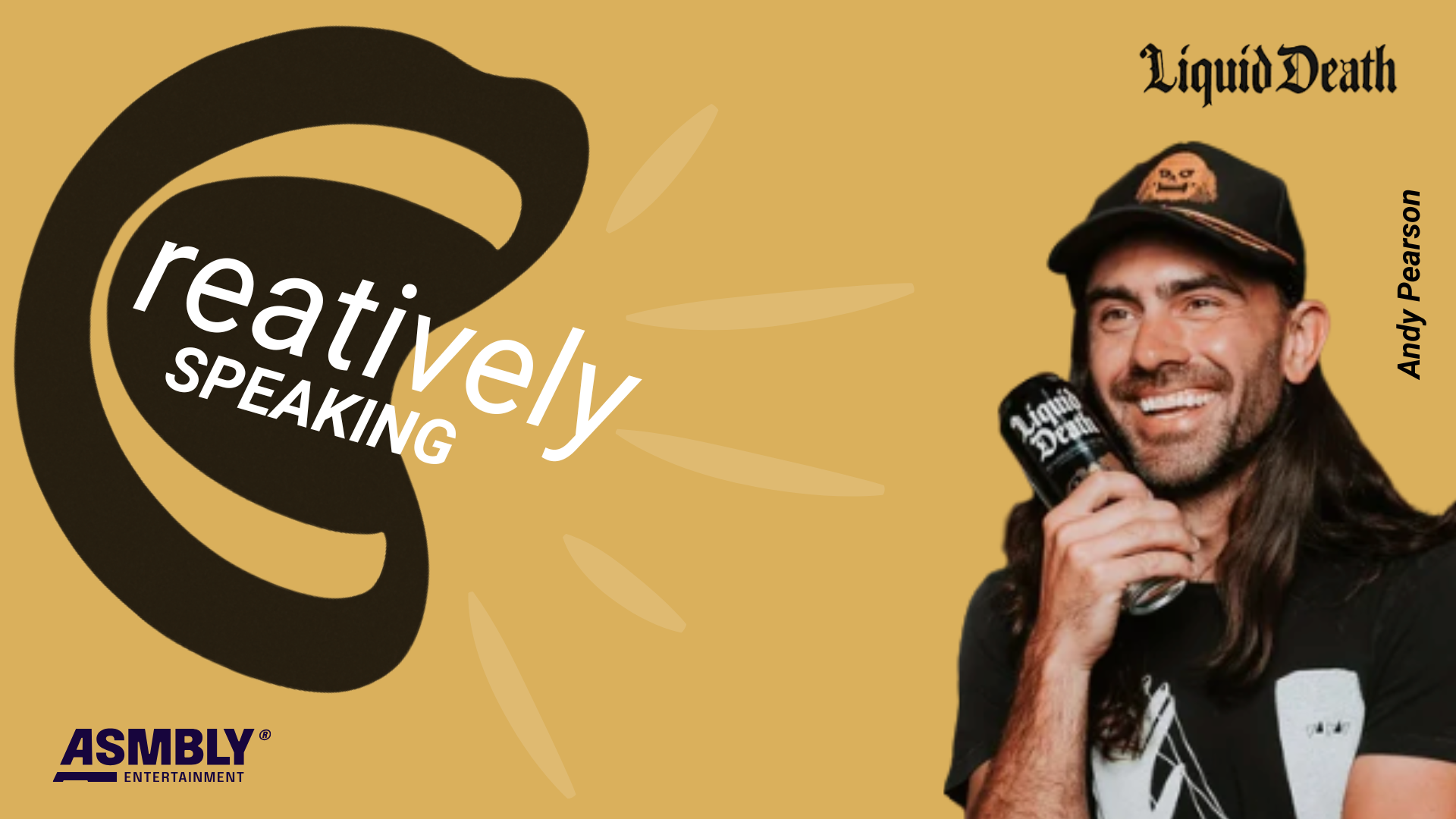
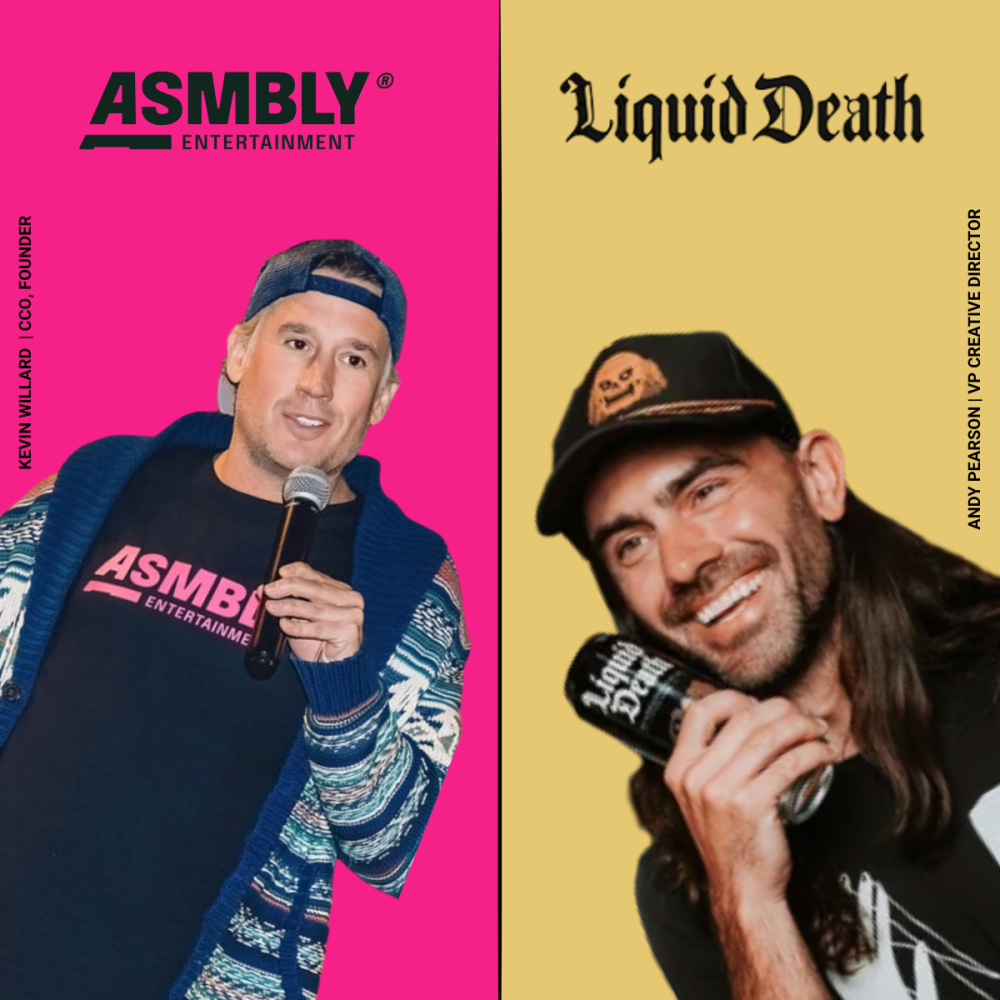
I spent an hour with Andy Pearson, VP Creative Director at Liquid Death.
His entire creative team fits on one hand. Five people. Total.
And he knows—uncomfortably—that no matter what they put into the world, even when it misses by their own standards, it's still better than most of what's being released into culture.
Not just their category. Not just their competitors. Everything.
He didn't say it with pride. He said it the way you say something when you wish it weren't true—but it is.
Being honest about that doesn't make him an asshole. It just makes the rest of the industry uncomfortable.
You could feel disappointment underneath it too. A quiet where's the competition? kind of disappointment.
That should bother you if you're not Liquid Death.
The Leadership Problem.
Let's be clear about where this sits.
This isn't about creativity—it's about the moment a good idea passes through authority and comes out smaller.
This isn't an agency problem. It's not a creative problem. It's not a budget problem.
It's a leadership problem.
Because every piece of mediocre work flooding the world passed through a moment—a very specific moment—where someone with authority could have stopped it.
And didn't.
Not because they lacked taste. Not because they lacked access to better ideas.
But because stopping it would have required nerve.
Mediocrity doesn't survive by accident. It survives because someone signs off on it.
Someone chooses approval over conviction.
Someone mistakes defensibility for intelligence. Someone decides "reasonable" is safer than "right."
Over time, the bar doesn't just lower— it disappears.
I didn't go into this conversation looking for lessons or frameworks.
I just wanted to talk.
About running. About work. About how things actually get made when they aren't translated through ten layers of approval.
What I got wasn't a methodology. It was a way of operating.
Running isn't a wellness habit for Andy. It's survival.
He wakes up early, runs 20 miles, then goes to work. He's completed races over 200 miles—the kind where finishing 100 just means you're halfway done.
This didn't start as a performance flex. It started as a counterweight.
Back in his CP+B days, he was working 70-hour weeks. The only way to balance that level of mental overload was to do something equally insane—just on the opposite side of the spectrum.
So he ran.
Long distances. Brutal distances. The kind that tell your mind to shut the hell up because nothing else gets through.
Running didn't become a place for ideas. It became a place for silence.
And silence, it turns out, is useful when your job is judgment.
Five People. Outrageous Output.
Andy talked about how ideas start in rooms as jokes—half-serious, almost throwaway thoughts—and then weeks later he'll realize they're going live.
Becoming real. Shipping into culture without ceremony.
That doesn't happen because they work miracles. It happens because there's nothing to fight through.
No bureaucracy. No translation layers. No endless meetings sanding the work down until it's safe enough to survive the room.
Speed builds belief. Belief builds permission. Permission builds momentum.
And momentum is what most brands keep trying to buy with media.
Liquid Death doesn't feel inconsistent at all. Quite the opposite.
It feels unmistakably itself—no matter what it's doing.
That's not because it follows rigid brand rules. It's because it understands its personality deeply enough that rules aren't required.
Andy talked about operating in a kind of three-dimensional space—where narrow guidelines don't exist because they don't need to.
The walls aren't tight. They're clear.
Clear enough that nothing feels random. Clear enough that absurdity still reads as intentional.
That's why something like Tony Hawk's blood infused into paint doesn't feel like a stunt. It feels inevitable.
The brand evolves the way a person evolves. Contradictory on paper. Coherent in reality.
When a brand knows who it is that well, consistency stops being something you police and starts being something you embody.
At some point we started talking about fans.
Not audiences. Not consumers.
Fans.
When was the last time your customers mailed you something?
Not a complaint. Not a return.
A gift.
Andy gets weird stuff in the mail constantly.
Over the years, people have sent:
- severed hands
- a severed head in a glass jar (fake, but real enough)
- miniature coffins with résumés inside
- and recently, a group of pallbearers in suits and white gloves showed up at the office carrying an urn with Andy's name on it
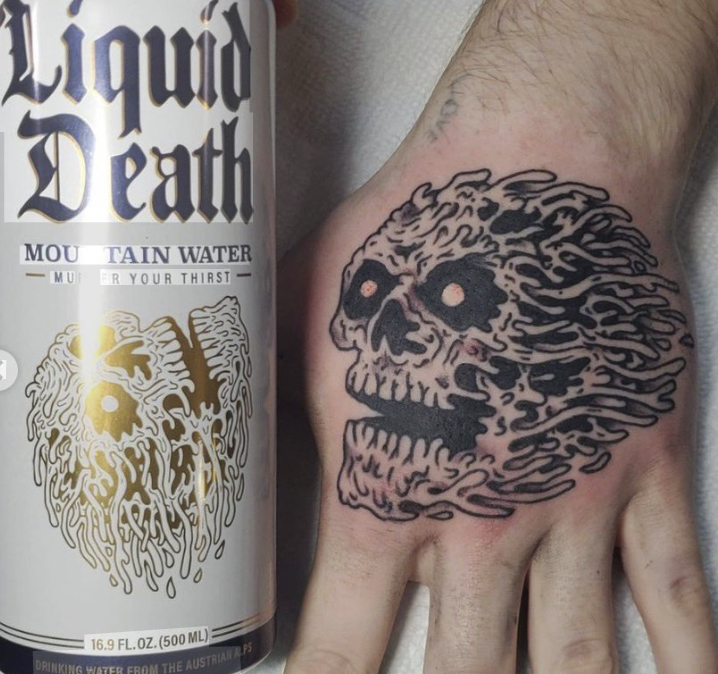
This isn't engagement. It's what happens when something stops behaving like marketing and starts behaving like culture.
People don't send offerings to companies. They send them to symbols. To ideas they feel part of.
Most brands are trying to be liked. Liquid Death is being inhabited.
Like people are climbing inside its body and drinking its blood from the inside.
At one point during our conversation, I cracked open a can of Liquid Death sparkling water.
First time.
I wanted to take the first sip while we were talking—so I did.
And what surprised me wasn't the taste. It was Andy.
He genuinely cared whether I liked it.
Not in a performative way. In a quiet, almost vulnerable way.
He talked about the decisions behind the sip — the smoothness, what isn't there, the absence of aftertaste. The restraint. The small choices most people never consciously notice, but always feel.
What surprised me wasn't the product. It was the care.
Not performative care. Actual attention.
Most people talk about brands in abstractions. He talked about a moment.
About what it feels like when someone opens a can. What happens in the half-second after the first sip. Whether anything lingers when it shouldn't.
When the Excuses Disappear.
This is the easiest moment in decades to stand out.
New formats didn't just appear — they removed friction.
Short-form storytelling. Micro-dramas. Lo-fi worldbuilding. Creator-led IP. Direct distribution without institutional permission.
You no longer need a massive budget, a perfect brief or twelve rounds of approval to see if something works. You can launch ideas in public. Test characters in real time. Let audiences tell you what has gravity — not decks.
The industry spent years blaming constraints for safe work.
Now the constraints are gone.
And instead of relief, what's left is exposure.
Because when the cost of experimentation drops to near zero, the excuses disappear with it. If you're still shipping work no one cares about, it's no longer because the system wouldn't allow better ideas.
It's because someone didn't choose them.
That's why this moment feels uncomfortable for leaders. Not because it's hard — but because it's clear.
Clear enough to reveal taste gaps. Clear enough to show who can actually judge ideas versus who's been hiding behind process. Clear enough to prove that bravery is no longer a production problem — it's a decision problem.
Formats like micro-dramas didn't just prove audiences still want story. They proved something far more unsettling:
You can build momentum without permission. You can earn attention before consensus. You can let culture, not hierarchy, do the filtering.
That terrifies systems built on control.
Because when the work can live or die on its own — without committees, without cover — the only thing protecting mediocre ideas disappears.
That's the real reason unreasonableness feels threatening right now.
Not because it's risky. But because it works.
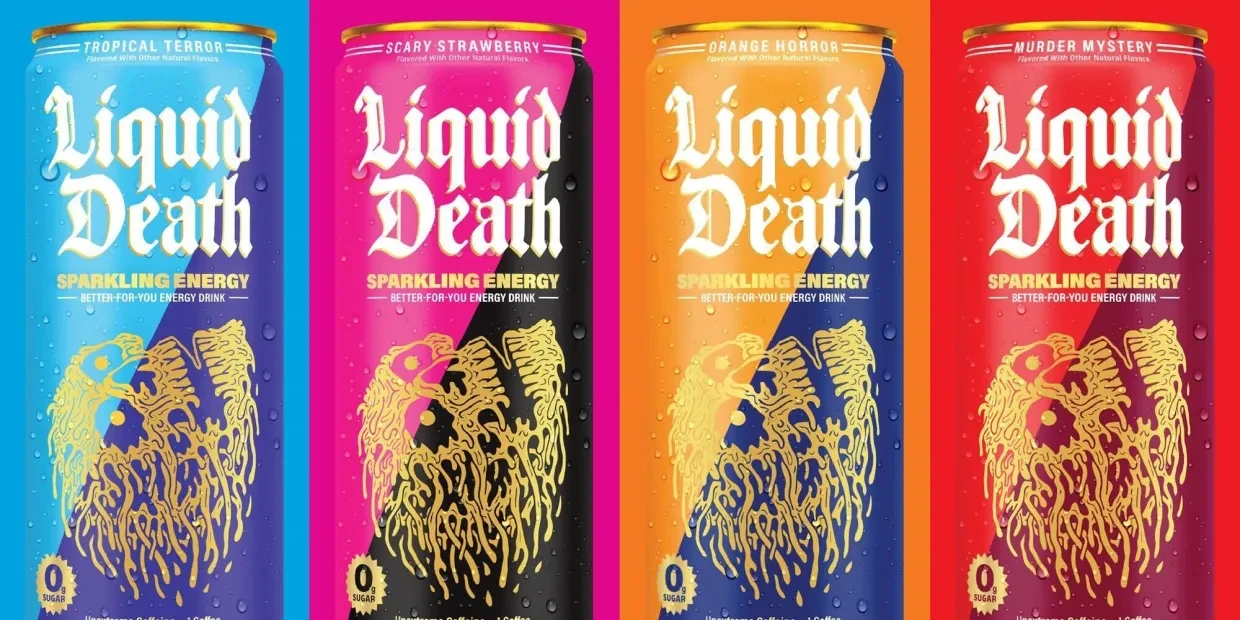
Liquid Death didn't "decide" to enter the energy category.
They noticed something.
The same people buying Liquid Death were also buying energy drinks—same cart, same trip.
So the question wasn't Should we do this? It was How do we meet people where they already are—without betraying who we are?
The answer wasn't more caffeine. It was less.
Cleaner ingredients. Lower caffeine. Still unmistakably Liquid Death.
The product didn't come from ambition. It came from attention.
Small steps, taken consistently in the right direction, add up to something unexpected.
Big swings out of nowhere usually fall flat.
Andy talked openly about leadership too.
About pushing a direction hard, then having a different conversation with CEO and founder Mike Cessario. Following that vision. And later realizing Mike was right all along.
Leadership isn't dominance. It's judgment.
Knowing when to push. Knowing when to follow. Owning the outcome either way.
At Liquid Death, the rule is simple:
If it sucks, it's our fault. If it's great, it's our fault too.
That level of ownership doesn't create fear. It creates permission.
Andy was also candid about the bar for creative work—and how low it is.
Not with arrogance. With disappointment.
That should worry you if you're not Liquid Death.
The Real Cost of Playing It Safe.
No one talks about your work. No one argues about it. No one feels anything.
And eventually—you stop feeling anything about it too.
You call it maturity. You call it experience. You call it "knowing how the game works."
What it really is:
Resignation.
This industry doesn't have a creativity problem. It has a courage problem.
And courage doesn't come from decks, frameworks or strategy documents.
It comes from a decision.
A moment where someone with authority says: "No. We're not shipping this."
Even when it's uncomfortable. Even when it's risky. Even when it would be easier not to.
Especially then.
Because being unreasonable isn't the danger. Compliance is.
Being unreasonable doesn't make the work risky. It gives it a pulse.
The real risk is deciding you're fine without one.