Every image had four things in it.
A red saddle blanket.
A yellow slicker.
A lariat.
A white hat.
If you've ever pictured the West as one man, one horse and a stretch of land that never seems to end, you've already been inside something he built.
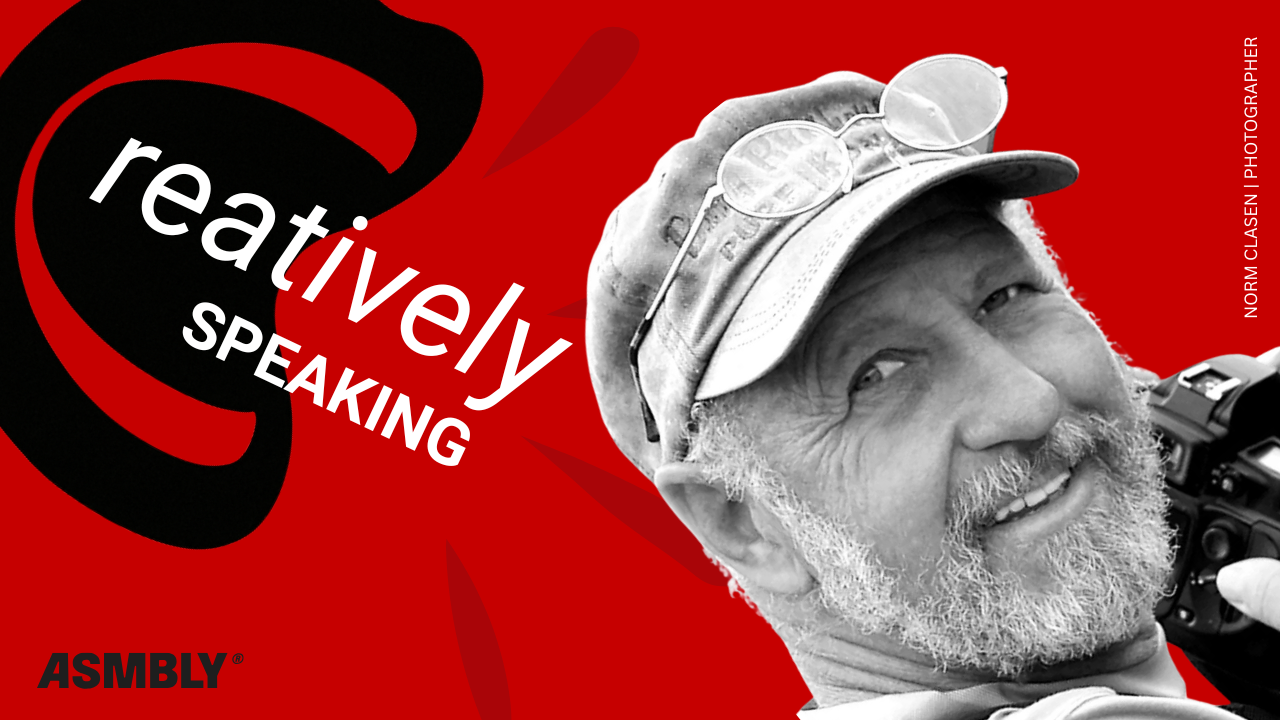
Norm Clasen.
He spent decades shooting the Marlboro campaign.
The one with that Cowboy.
The version of the West most people carry around didn't happen by accident. It was made, frame by frame, over decades, by the person who spent most of his working life inside it.
I'm sitting there listening to him talk through it.
You expect a story that matches that. It doesn't.
"I didn't have the credentials that a lot of the photographers had… but they found something in that first test shoot."
He kind of shrugs when he says it.
Then he starts walking through how the work actually got made.
"It was myself… my producer… and another shooter. There was just the three of us. And then you had the cowboys."
No lighting. No big crew.
"No model could ever do what these guys were asked to do."
He laughs talking about it now, but at the time he said he was completely panicked.
"There I am, standing there, this tall skinny kid with a camera in my hand…"
And suddenly the people he'd been seeing on billboards and in ads for years were standing right in front of him.
"That guy's actually looking at me."
He says his producer, Cece, kept nudging him.
"You gotta do something here to get their trust."
He doesn't know what that means yet.
Then she tells him:
"Just tell them you won't ask them to do anything you won't do."
One of the cowboys looks at him.
Daryl. Big mustache. Steel blue eyes.
Points to a horse.
"See that horse over there? Go cinch it up. Get on him."
Norm pauses there for a second.
"Uh… no, that's okay."
The room laughs.
Then:
"Well, get on it."
He says he'd ridden horses growing up, so it wasn't completely foreign. Still, he knew exactly what this was.
He walks over, tightens the saddle, gets on.
And almost immediately the horse starts crowhopping.
"It's not a full buck… they just hop."
He's trying not to get thrown off in front of everyone.
"I'm sitting there going, God, don't let me get bucked off."
He finally gets the horse up the hill, turns it around, rides it back down to Daryl, gets off, hands him the reins and says:
"Are we friends now?"
That gets another laugh.
But you can feel the shift in the room.
And then he says something that lands heavier than the story itself.
Trust Was Everything.
"Trust was everything. Trust and respect."
Not just between him and the cowboys.
The animals. The crew. The whole thing.
That little ride up and down the hill became the start of thirteen years working together.
Later he's talking about the images.
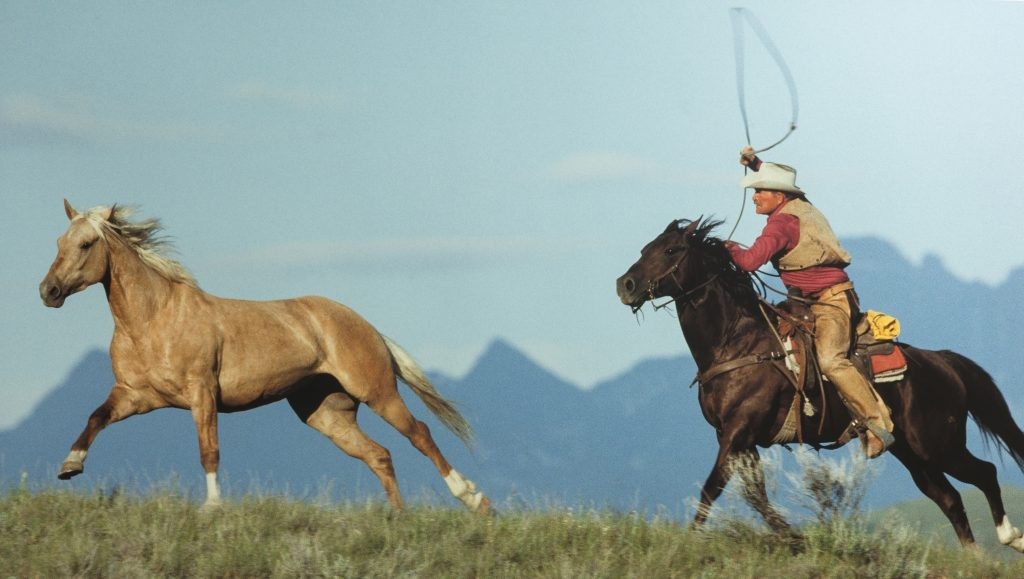
"The Marlboro Man works all day… you'll be out there at midday sun whether you like it or not."
He smiles a little, like he knows how wrong that sounds.
"If it wasn't right out of the camera, it wasn't used."
No fixing it later. No adjusting it after.
"The little vignettes… the things that a cowboy does… putting on spurs… tightening a fence… it just goes on and on."
Putting on spurs. Fixing a fence. Riding out. Nothing dramatic. Just real.
Somewhere in there I drift into his version of the West. The wild of it. The magic of it. It stops feeling like a talk and starts looking like something you've already seen.
He just keeps going.
"From the border of Canada all the way down… clear down to New Mexico and Arizona… snow one minute… desert the next."
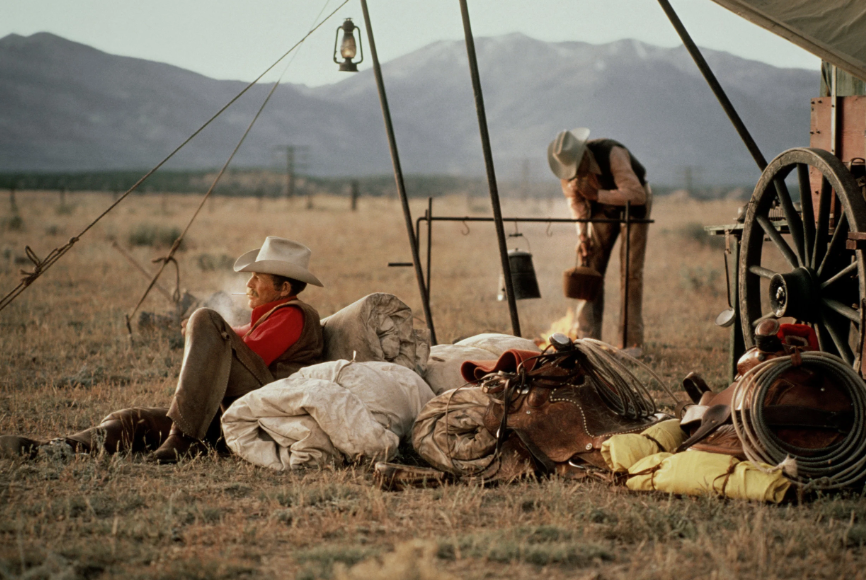
"Bad weather was the best weather… because you could bring out that yellow slicker. That was money in the bank. I mean, really, money in the bank. It was just perfect… it was just beautiful to have those slickers show up… it was a symbol of the West."
He says it like he's still seeing it happen.
Someone asks how it lasted as long as it did.
Same idea. Same character.
He doesn't hesitate.
Says nobody knew who the guy was. That was the whole point.
No name. No backstory. No explanation. Just a figure.
The World Around Him.
"If you had known… it would have killed the entire campaign."
They kept him at a distance. And by they I mean the team at Leo Burnett who created all of this.
And that's the part that sticks with me.
We talk about character building like it lives inside dialogue or backstory.
But the Marlboro Man didn't.
You never really knew who he was.
What you knew was the world around him.
The horse. The weather. The yellow slicker. The silence. The distance.
The life.
And somehow that made him feel even more real.
They didn't just build a character.
They built a world people could see themselves inside of.
And that's the part you don't really think about, not while you're looking at it. But sitting there, I start to feel it. How much of it depends on what's not said. How little it takes to break it.
300 Pounds of Sugar.
And then it disappears back into the way he works.
He gets a call. Middle of summer.
"Just around the Fourth of July… they said, 'boy, we need a winter shot.'"
He laughs a little.
"I said, what? What do you want me to do that? It's the middle of July. There's no snow anywhere in the country."
For a second it sounds like maybe this becomes someone else's problem.
It doesn't.
"That's up to you. You figure it out. You got the budget."
He shakes his head a little talking about it, like it still makes no sense.
"My producer said, 'I wonder how much sugar is available… in Montana.'"
That gets a laugh out of the room.
Then he keeps going.
They start buying it. Bags of sugar. Wherever they can find it on the drive up.
"We rounded up as many bags of sugar as we could find."
White sheets laid across the ground. Sugar over the top. Corrals covered. Everything in frame.
"We had a cowboy at 85 degree weather with a big sheepskin coat on leading a horse out of a corral."
And then he smiles.
"He said to me, 'I'm not gonna be doing this too many times.'"
They shoot it.
Run it as an ad.
No one questions it.
"We had at least 300 pounds of sugar."
Nothing about the way he describes any of this sounds precious. It sounds repeatable.
"A lot of times there are eight, ten, twelve people on a set… everyone trying to add something… and before long it disappears. This was different. It was just us… and the cowboys."
Small crew. Real people. Same core elements, over and over, never exactly the same.
The Restraint.
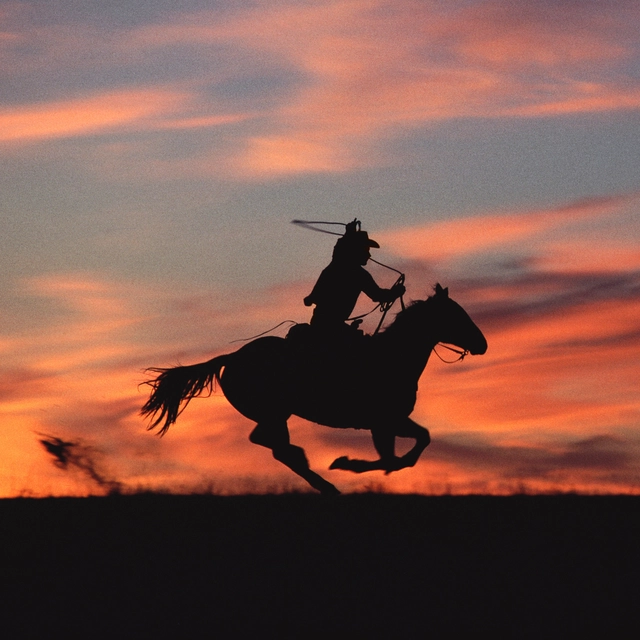
At some point you realize he's not really talking about a campaign. He's describing a world.
One built carefully enough that people could step inside it and see themselves there.
That's the part I keep thinking about.
Not the cigarettes. Not even the cowboy.
The restraint.
How much they left unsaid.
How the mystery itself became part of the character.
And how maybe the strongest characters aren't built through explanation at all.
Maybe they're built through the worlds around them.