ASMBLY POV · Branded Entertainment
Welcome to the
Entertainment Business.
Entertainment has a brutal feedback mechanism built into it:
Nobody has
to watch.
That sounds obvious. But advertising has spent most of its history operating under a very different arrangement. Buy the page, the commercial break, the pre-roll, the placement, the impression. Whatever happens creatively, you've purchased a moment in front of someone.
Then brands started making entertainment.
And brought the old expectations with them.
A bigger production. A documentary instead of a commercial. Six episodes instead of one. A YouTube channel instead of a media buy.
But changing the format doesn't change the transaction.
The moment you enter entertainment, attention is no longer included.
Branded entertainment is programming created or funded by a brand that people choose to spend time with.
That choice changes what we're responsible for making.
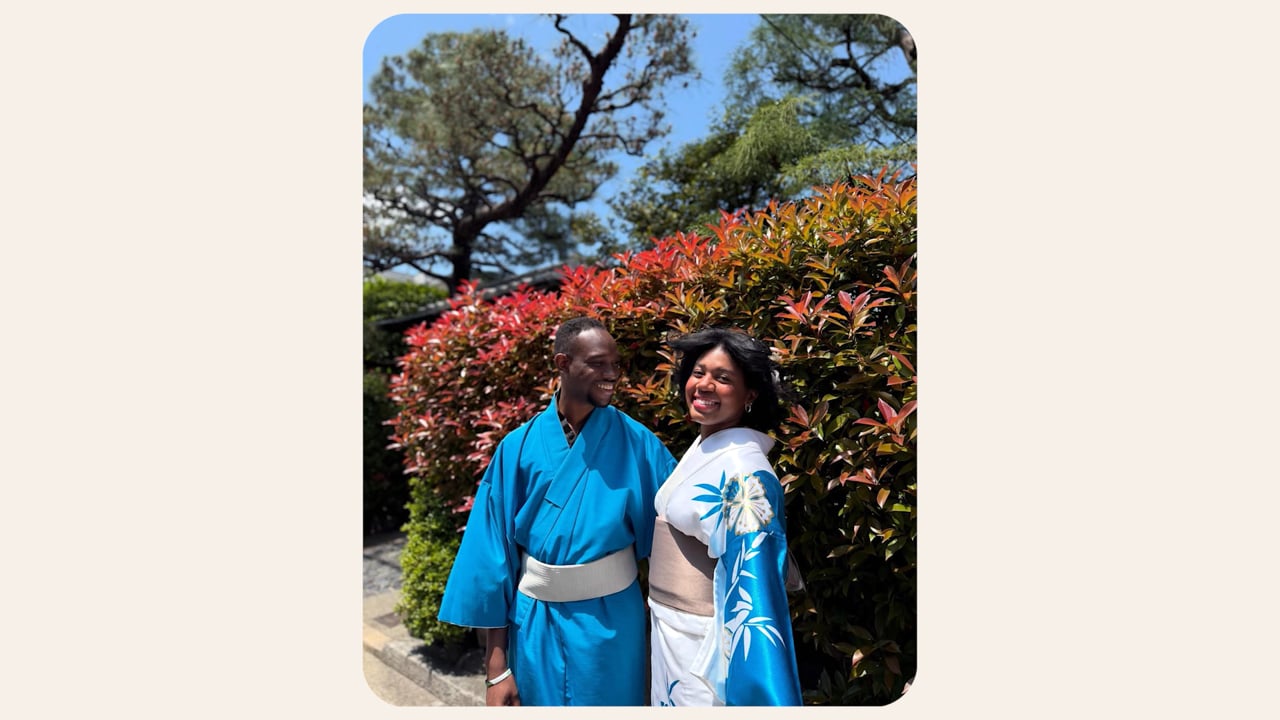
When we started This Is My Oura Story, we had three remarkable members and three remarkable health journeys. But none of that guaranteed we had three films.
A crew entering someone's home, putting cameras in their face and asking them to share something deeply personal doesn't automatically produce a story. It can just as easily kill one.
So we spent a lot of time thinking about comfort. Trust. How small the crew could be. When to push. When to shut up.
Because Tim wasn't there to deliver our message.
Neither were Nicole or Bria.
They had lived through something.
Our responsibility was to find the story inside it.
And that created an interesting tension.
Oura needed to matter.
But the harder we tried to make Oura matter, the greater the risk that the films would start feeling like advertising.
So we stopped trying to prove it.
We followed the people.
And when the ring or the data became consequential to what happened, it was consequential because it actually was.
That's a very different kind of brand presence.
It asks for restraint.
And restraint is terrifying when you're paying for the thing.
You start wondering whether the product needs another shot. Whether someone should explain the feature. Whether the brand is getting enough credit.
Those are reasonable questions.
They're also exactly how an interesting person can slowly become a testimonial.
Maybe that's the real price of entering the entertainment business.
You give up some control.
Outcome control.
You can make the work. Distribute it. Promote it. Put the best people in the room.
But eventually, somebody you've never met is sitting on a couch holding a remote.
And your entire strategy comes down to what they do next.
I fucking
love that.
Because the risk opens up an enormous opportunity for brands:
People might actually want you there.
They might seek you out. Give you twenty minutes. Send what you made to a friend. Come back next Thursday because there's another episode.
Think about how extraordinary that is.
For most of their existence, brands have reached audiences through things other people built. Television networks gave us shows. Magazines gave us readers. Stadiums gave us fans. YouTube gave us viewers. Creators built communities.
Now brands can build something people gather around themselves.
A documentary series.
A recurring show.
A character people follow.
A world people want to spend time inside.
Or some new form we haven't found yet.
That's the part that gets me excited.
The canvas is enormous.
A hotel company could make the travel show I plan a vacation around.
An outdoor company could make an adventure series that sends me looking at flights to Patagonia.
A health company could tell stories that change the way I understand my own body.
A car company could make something my son and I watch together every Sunday morning.
And the brand gets to be the reason it exists.
That takes guts.
Because entertainment asks you to trust the idea. Trust the people making it. Trust the people inside it. And ultimately trust an audience to decide what deserves their time.
We felt that making This Is My Oura Story.
Tim, Nicole and Bria gave us something far more valuable than a product message. They gave us lives worth paying attention to.
Our job was to honor that.
Oura's role emerged through what actually happened to them. The product had consequence because it had consequence in their lives.
And suddenly the relationship between brand and audience changes.
You're giving someone something.
A story.
An experience.
A reason to care.
Maybe even something they'll remember.
And getting someone to care opens up an even more interesting possibility:
What if they want another one?
That's where this gets really exciting.
Because now we're talking about something bigger than a piece of content.
We're talking about an audience.
People who choose to return.
People who begin to recognize the format, the characters, the world, the feeling.
People who wonder what's coming next.
That's the opportunity I see in branded entertainment.
Advertising gave brands an extraordinary ability to reach people.
Entertainment gives us the chance to build something they'll come looking for.
And when that happens, something incredible starts.
Someone reaches the end of what you made—
and wants the next one.