The Well of Death and the Great Return of Racing Pigeons
A conversation with filmmaker Pranav Dawar
If you ever run into an old man carrying a cage covered in cloth, ask what’s inside.
When he tells you it’s a pigeon, ask why.
When he tells you it’s for “the race,” ask where.
Then go to that race.
Pranav and I were both in Cannes this year.
He was in Cannes screening his film: Well of Death.
I was in Cannes screening: ASMBLY.
We didn’t meet there.
Instead, I met one of the founders of a New York-based social agency called Wrk The Room. She had a few summer interns. One of those interns had a boyfriend.
That boyfriend was Pranav.
Like anyone trying to successfully break into anything, Pranav was trying to connect with anyone closer to the place he was trying to get to.
And as chance would have it, one of those people was me.
Pranav is 23. He’s from India. When we talked, he was in Indianapolis for another screening, this time at the Indy Shorts International Film Festival.
“With every project I take on, I try to approach a new part of the world and uncover something new,” he told me.
I asked where that instinct came from.
“Curiosity. Wanting to explore and learn more. We’re all in our bubbles.”
I knew exactly what he meant. Anytime I travel, I find myself looking through the window of a home or a restaurant and wondering about the people inside. What are their lives like? Where are they going after this?
“Because there’s a story everywhere,” Pranav said. “There is no profession or person in the world whose life is boring.”
He had arrived in Indianapolis the day before. After growing up among the density and chaos of India’s biggest cities, Indianapolis presented a considerably quieter mystery.
“I walked to a corner store to grab some water and snacks. There’s one Whole Foods in the whole downtown and maybe three convenience stores. The biggest building is Salesforce.”
I asked if he felt understimulated.
“I don’t want to attract any hatred toward me, but yes.”
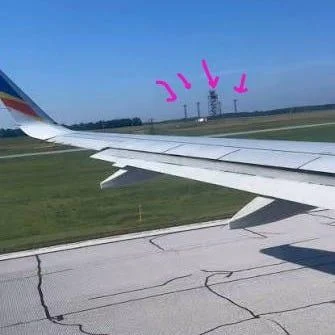
Imagine traveling 35 hours and ending up in Indianapolis, Indiana.
Like that’s the place you were, on purpose, trying to get to.
In August.
You slide up the window shade, excited for your first glimpse of this whole new world and…
Four buildings.
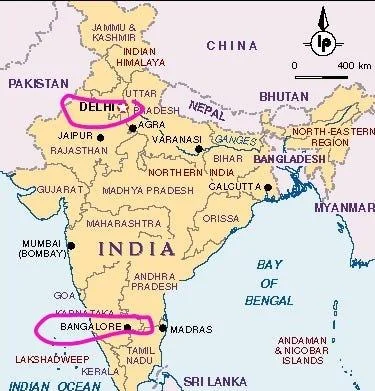
Pranav grew up in the bigger cities of India, first near Delhi and then in Bangalore.
He describes it as growing up with every spectrum of life unfolding directly in front of him.
“You see the poverty and you see the rich and you see the conflicts of life. They’re so concentrated in those cities that you see it all unraveling in front of you.”
He believes that proximity helped him develop empathy.
“You can’t be an artist without empathy.”
But for most of his childhood, Pranav didn’t see India as the source of his artistic perspective. He saw everything standing between him and the rest of the world.
“Until I was seventeen or eighteen, I thought, man, I wish I wasn’t born in India. There are so many disadvantages. It’s a struggle to get a visa to go anywhere.”
I look at my passport and think access.
Pranav looks at his and sees limitation.
He can decide where he wants to go, save the money, buy the ticket and still have another question waiting for him:
Will they let me in?
I’ve never had to ask that question.
Pranav got into Pratt in 2020.
It’s a famous private art and design school out of Brooklyn. Robert Redford went there. And the guy who designed the Chrysler Building. And the dude from Entourage.
Then COVID happened.
The school gave him the option to defer for a year, so he did. Like the rest of the world, he lost track of time. He started waking up at two in the afternoon and going to bed at six in the morning.
But before going to sleep, he watched movies.
Three of them.
Every night.
“I thought, I’m going to get my film education now so that when I get to college, I’ll know what I’m talking about.”
For a year, he binged films back to back to back.
I asked him to name three that changed the way he saw filmmaking.
He quickly rattled off three.
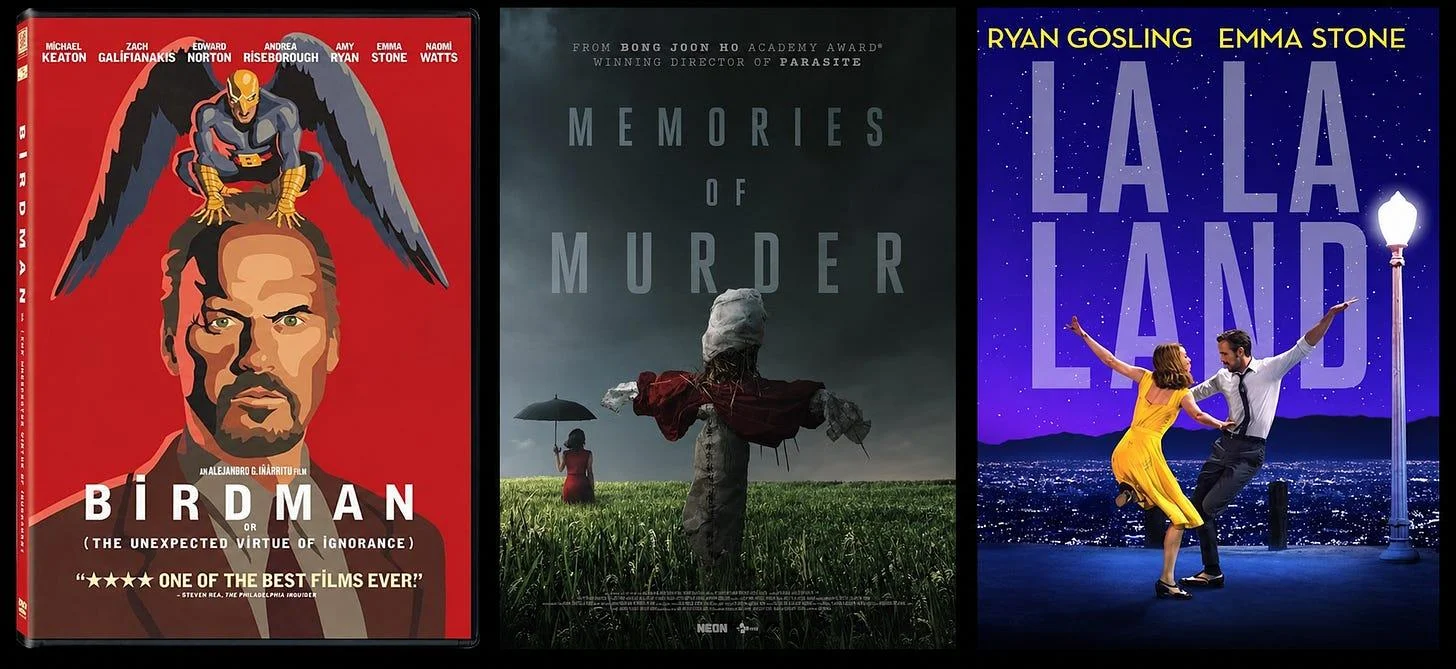
Memories of Murder showed him how a director could block actors and control a frame filled with people.
BIRDMAN showed him how architecture could become part of the story, carrying an audience through rooms, hallways and backstage chaos without breaking the illusion of a single shot.
La La Land showed him how a filmmaker could pull people into something they had already decided wasn’t for them.
“I’ve heard people say, ‘We’re not really into musicals, so we like La La Land.’ How do you make that happen? How do you bring an audience into something they’re usually not interested in and have them leave the theater with tears in their eyes?”
A year later, Pranav moved to New York.
He was 17.
But living in New York began to change the way he understood both places.
The place he had once wished himself away from became essential to the filmmaker he was becoming.
“Throughout college, I realized how important it is to have your identity and recognize where you’re from and what shaped you.”
THE WELL OF DEATH
By the time Well of Death reached Indianapolis, it had already traveled quite a bit.
Cannes. Tasveer. NFFTY. NBR—the National Board of Review.
Not bad for a film about people driving motorcycles around the walls of a giant wooden hole.
The original title is Karnama. It follows the stunt drivers of India’s Well of Death, a circus attraction where people race cars and motorcycles around the vertical walls of enormous wooden arenas.
“These drivers put their lives on the line every day because it’s their passion,” Pranav said. “Entertaining people all over the country is what drives them.”
The Well of Death wasn’t some strange subculture Pranav discovered while researching film ideas. Nearly every Indian of his generation had seen it at some point.
Pranav first saw it with his parents when he was five or six.
He can’t remember exactly what happened.
He remembers what it felt like.
The engines.
The smoke.
The smell of petroleum as the drivers revved their motorcycles.
Years later, while searching for an idea for his thesis film, the memory came back.
Wait, that’s cool.
He hadn’t seen a Well of Death in years. He hadn’t even heard anyone mention one.
What happened to it?
The spectacle had largely disappeared. It was banned from major cities because of the danger. Audiences moved on. Something that had once felt inseparable from his childhood had quietly begun to vanish.
I’ve always found it interesting, the way our memory works.
What sticks and what slips away into nothingness.
Our brains behind the wheel, making all these unconscious decisions for us.
Like there’s a little all-knowing guy in there, sweating his ass off and pulling levers with all his weight. Deciding in real time what to keep and what to trash.
Pranav’s guy must have taken a liking to engines and high RPMs.
Smoky gasoline air and death-defying spectacles.
At the age of five.
I feel like my guy and his would get on quite nicely.
Pranav ultimately wants to direct a fiction feature.
The documentaries are helping him find his way there.
“They’re helping me learn more about the world and understand more about people. You need to know how people behave. What motivates someone to do something.”
He isn’t trying to rush past that education. He’s making films while collecting the knowledge and maturity he believes he’ll need to make the feature he has in his head.
If you want to become a feature-film director, there really isn’t a path to follow.
At 17, Pranav left home, traveled 8,000 miles to New York and started making one up.
An only child.
Film school.
Another country.
A career with absolutely no guarantee waiting on the other side of any of it.
Each step its own mountain.
When I was 17, I was stealing alcohol from my parents’ liquor cabinet.
AND THEN THERE WERE PIGEONS
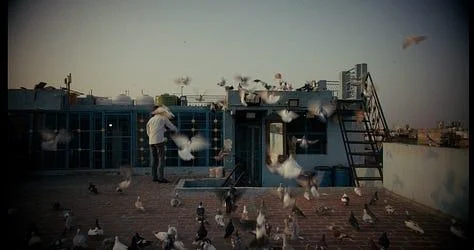
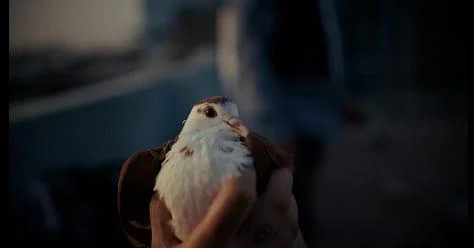
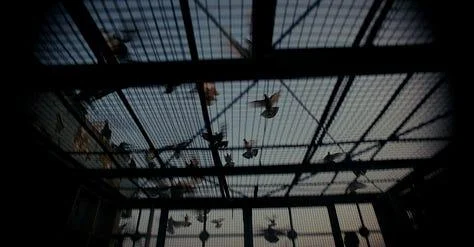
Pranav’s co-director, Vidhu Kota, was in Chandni Chowk, near the Red Fort, trying to get an old camera battery rebuilt.
When he left the shop, he noticed a man walking away from an animal market carrying a cage covered with a cloth.
Vidhu stopped him.
“What did you buy?”
“A pigeon.”
“Why?”
“There’s a race this weekend.”
“Where?”
“Right here.”
And there we have it.
Vidhu reached out to Pranav and the two of them found the next world to dive into.
Kabootarbaazi.
Every evening, above the chaos of Old Delhi, men climb onto rooftops and release hundreds of pigeons into the sky.
They train them for months. Sometimes years.
Fathers teach sons. Experts teach students. Friendships form on rooftops. Entire days become organized around the birds.
All while the city beneath them keeps changing.
Pranav is one of those people you meet and immediately want to see succeed.
I felt invested in his journey.
Actually, I am invested in his journey.
ASMBLY is going to executive produce his film about Kabootarbaazi.
I had no idea people raced pigeons in India. Neither did Pranav until he saw an old man carrying a covered cage and decided to ask what was inside.
That’s the thing about curiosity.
It notices something, asks another question and follows the answer somewhere unexpected.
Maybe we help Pranav make a great film.
Maybe we help him move one step closer to becoming the filmmaker he wants to be.
Either way, I get to be part of what happens next.
How cool is that?